Spanish Food Culture
Beyond the recipes: Dive into the heart of Spain's culinary traditions, regional diversity, and dining etiquette.
The Tapas Tradition
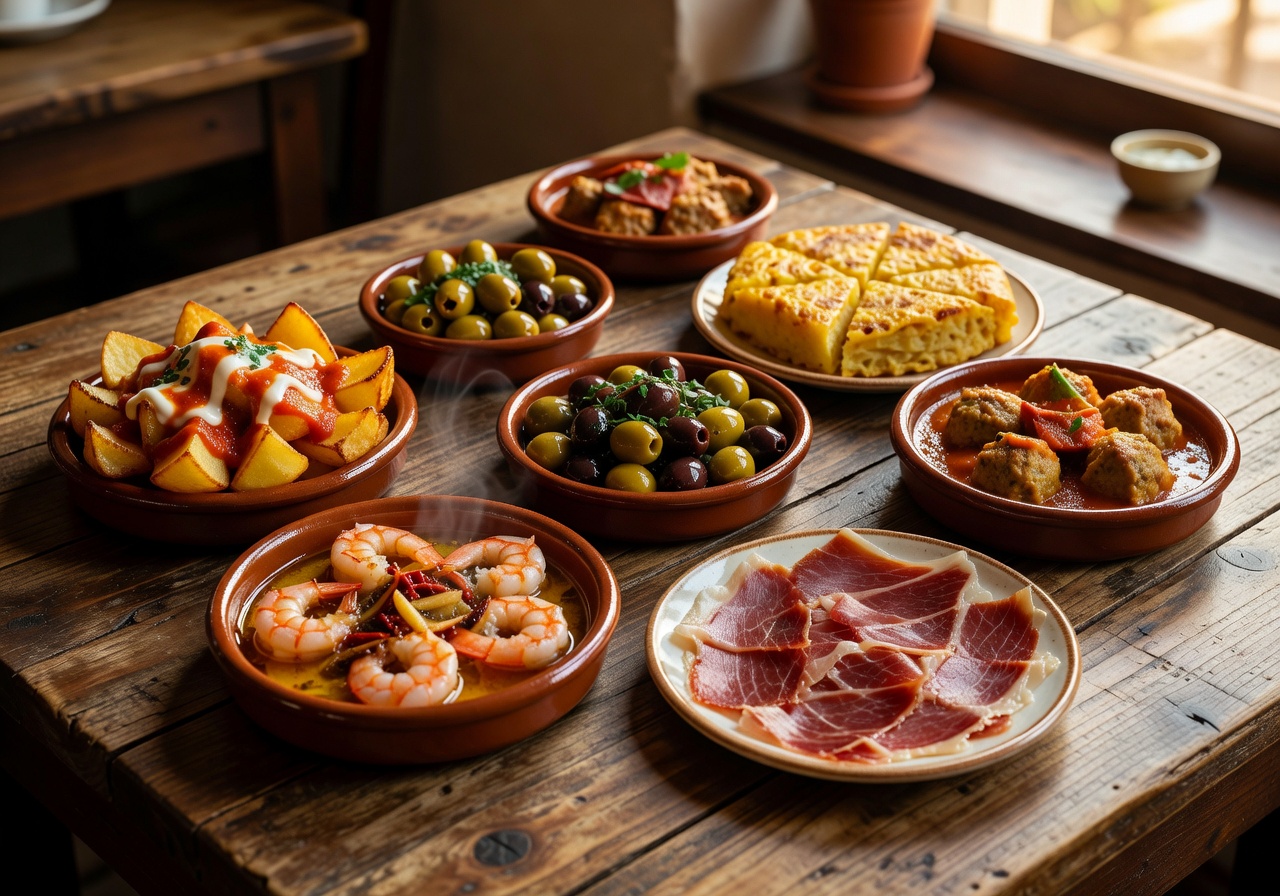
In Spain, eating is a highly social activity. The concept of tapas—small plates of food meant to be shared alongside drinks—originated as a way to cover (tapar) one's glass to keep fruit flies out. Today, going out for tapas ("tapear") involves moving from bar to bar, enjoying a drink and a small dish at each stop.
Regional Diversity
Spain is not a monolith; its geography heavily dictates its food:
- Andalusia (South): Known for deep-fried seafood, Gazpacho, and olives.
- Valencia (East): The birthplace of Paella and citrus fruits.
- Basque Country (North): Famous for Pintxos and world-renowned fine dining.
- Central Spain (Madrid/Castile): Known for hearty meat stews and roast suckling pig.
Dining Habits
If you visit Spain, prepare to adjust your clock:
- Breakfast (El Desayuno): Very light, usually coffee and a pastry or toast with tomato (Pan con Tomate) around 8 AM.
- Lunch (La Comida): The largest meal of the day, happening between 2:00 PM and 4:00 PM.
- Dinner (La Cena): Much lighter and served late, rarely before 9:00 PM, often extending past 10:30 PM.